
PLAYERS
Max Dowman Told To Leave Arsenal As Arteta Faces Fresh Youth Development Criticism
Max Dowman has been urged to leave Arsenal by talkSPORT presenter Adrian Durham, who claims Mikel Arteta’s handling of young talent should concern the teenage prodigy.
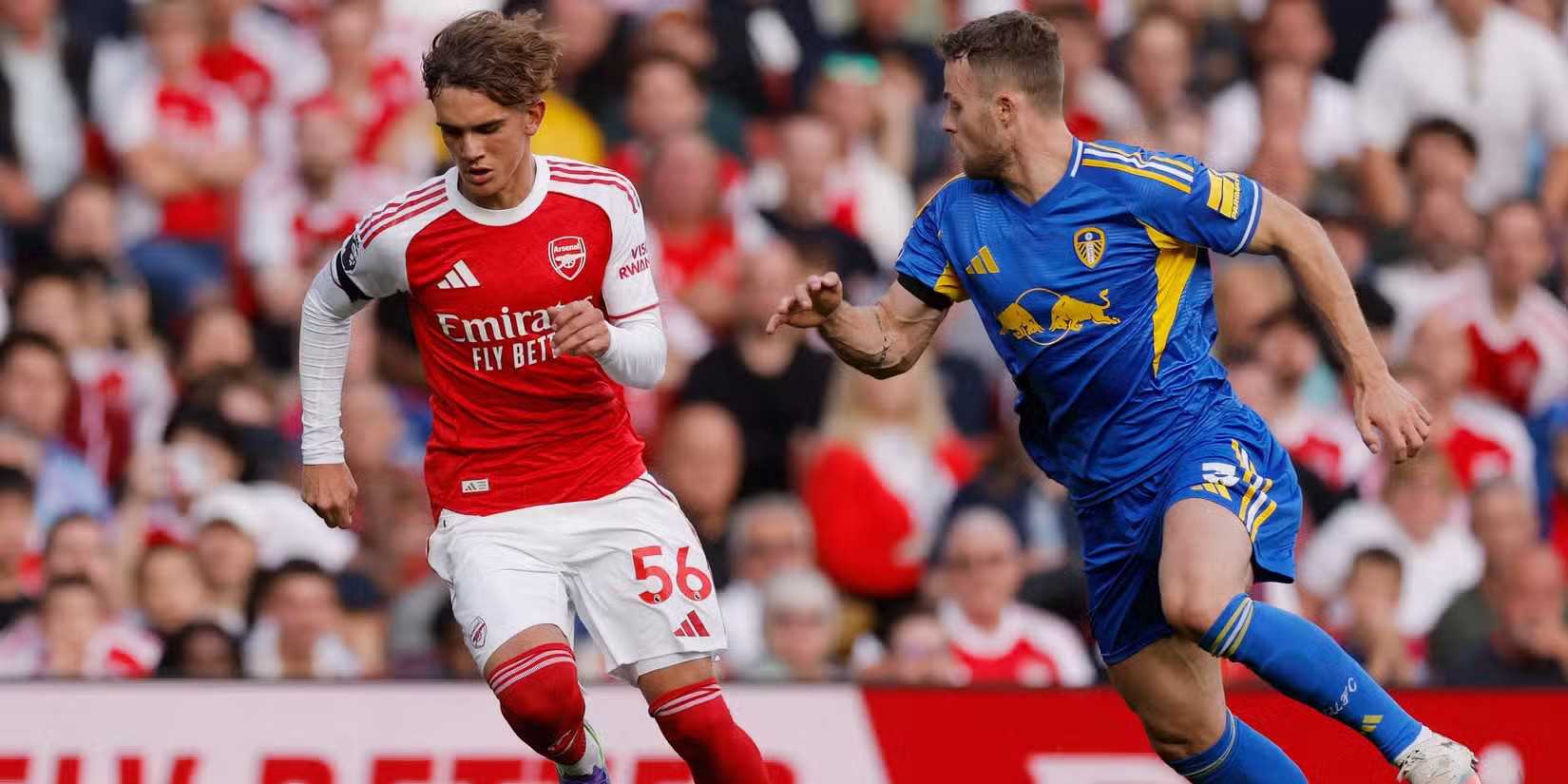
Arsenal wonderkid Max Dowman has been urged to leave the club as soon as possible after fresh criticism of Mikel Arteta’s handling of young talent. The latest comments, made by talkSPORT presenter Adrian Durham, argue that Dowman should look at the recent paths of fellow academy products before deciding that his long-term future belongs at the Emirates. It is a dramatic claim, but one that has quickly gained attention because Dowman is already viewed as one of the most gifted young players in Europe and because his rise has come at a moment when Arsenal are trying to balance elite competition with youth development.
Dowman’s profile has risen sharply in recent weeks. The teenage attacker became the youngest goalscorer in Premier League history earlier this month, a moment that immediately intensified the hype around his talent and accelerated the debate over how Arsenal should manage him. Whenever a player this young makes such an explosive entrance into the senior conversation, every decision around minutes, role and pathway becomes magnified. That is exactly what is happening now. Durham has taken the most extreme position possible, arguing not merely that Arsenal should use Dowman differently, but that the player should actively plan his future away from the club.
Why the criticism has surfaced now
The timing of the comments is not accidental. Arsenal’s recent Carabao Cup final defeat to Manchester City revived wider scrutiny of Arteta’s choices, and Durham used that result as part of his case. His argument was that if Arsenal needed something special and still did not turn to Dowman from the bench, then the manager’s trust in him may not be as deep as some supporters hope. That interpretation may be controversial, but it fits a broader pattern in football discourse: one high-profile selection call can suddenly become evidence for an entire theory about a manager’s philosophy.
Durham also framed his criticism through comparisons with Ethan Nwaneri and Myles Lewis-Skelly, two other Hale End graduates whose recent trajectories he sees as warning signs. In his telling, one has been moved aside and the other has seen his development redirected in an unsatisfying way. Whether that reading is fair or exaggerated is open to debate, but it is clearly designed to send a message to Dowman: do not assume your future will be protected simply because the club celebrates academy success in public.
The difficulty of judging youth pathways at elite clubs
There is an important tension at the heart of this conversation. On one side is the undeniable appeal of playing young talent quickly, especially when that talent appears extraordinary. On the other is the reality that title-chasing clubs do not offer easy development environments. Arsenal are competing at the top of the Premier League, pushing in Europe and operating under intense scrutiny every week. In that context, integrating teenagers is always more complicated than it looks from the outside. Managers are not only trying to develop players. They are also trying to win immediately, protect confidence and manage expectations.
That is why cases like Dowman’s often become emotional debates rather than purely football ones. Supporters see brilliance and want opportunity. Coaches see brilliance too, but they also see physical readiness, tactical adaptation, squad hierarchy and the danger of placing too much weight on a young player too soon. Neither side is automatically wrong. The challenge is in getting the balance right. Durham’s comments cut against that complexity by offering a definitive conclusion: leave now. But real player development rarely works in such simple lines.
What makes Dowman different in this debate
Even so, Dowman is not just another academy player with promise. His talent level is such that every delay will feel significant and every appearance will feel symbolic. That is the burden of breaking records early. Once a teenager scores in the Premier League and begins to look capable of influencing major matches, patience becomes harder to preach to those watching from outside. The sense of urgency grows, because the player already appears to belong to a higher stage than his age would normally allow.
The complication for Arsenal is that the right wing and attacking midfield areas are already crowded with established names. Bukayo Saka remains central to the team’s structure, and the club have repeatedly invested in attacking options. That can make the path for a player like Dowman less obvious in the short term, even if the long-term belief inside the club remains strong. Criticism like Durham’s feeds on precisely this kind of congestion. If the route looks blocked, outsiders will always suggest the player should go where the pathway seems clearer.
Arteta’s bigger challenge with elite young talent
For Arteta, the issue is now larger than one comment or one media rant. Arsenal have reached the stage where the management of elite teenage talent becomes part of how the project is judged. At clubs competing for major honours, it is not enough to sign well and set up a strong first eleven. There is also an expectation that exceptional academy players will be given a convincing route into the team. If Arsenal want to be seen as a destination where the best young players can both develop and win, cases like Dowman’s matter enormously.
That does not mean the teenager should be rushed into every big occasion, nor that one pundit’s criticism should dictate the strategy. But it does mean the club must think carefully about how it communicates belief in him and how it structures his progress. The modern game moves quickly, and the biggest talents attract noise from everywhere. If Arsenal truly view Dowman as a future star, they will need to make that pathway feel real as well as theoretical.
- Adrian Durham has urged Max Dowman to leave Arsenal as soon as possible.
- The criticism is rooted in concerns over Mikel Arteta’s handling of other young players.
- Dowman’s record-breaking early impact has intensified scrutiny over his development pathway.
- Arsenal must balance youth integration with the demands of competing for major trophies.
- The debate underlines how important Dowman’s progression could become for the club’s identity.
Ultimately, the strongest part of the story is not the drama of the quote itself, but what it reveals about expectations around Dowman. He is now seen as a talent important enough to provoke arguments about strategy, philosophy and the future shape of Arsenal’s squad. Whether he stays, thrives and proves patience was the correct route, or whether the noise around his development keeps growing, one thing is clear: Arsenal’s handling of him will be watched extremely closely from here on.
Comments
Comments publish immediately.
Loading comments...